
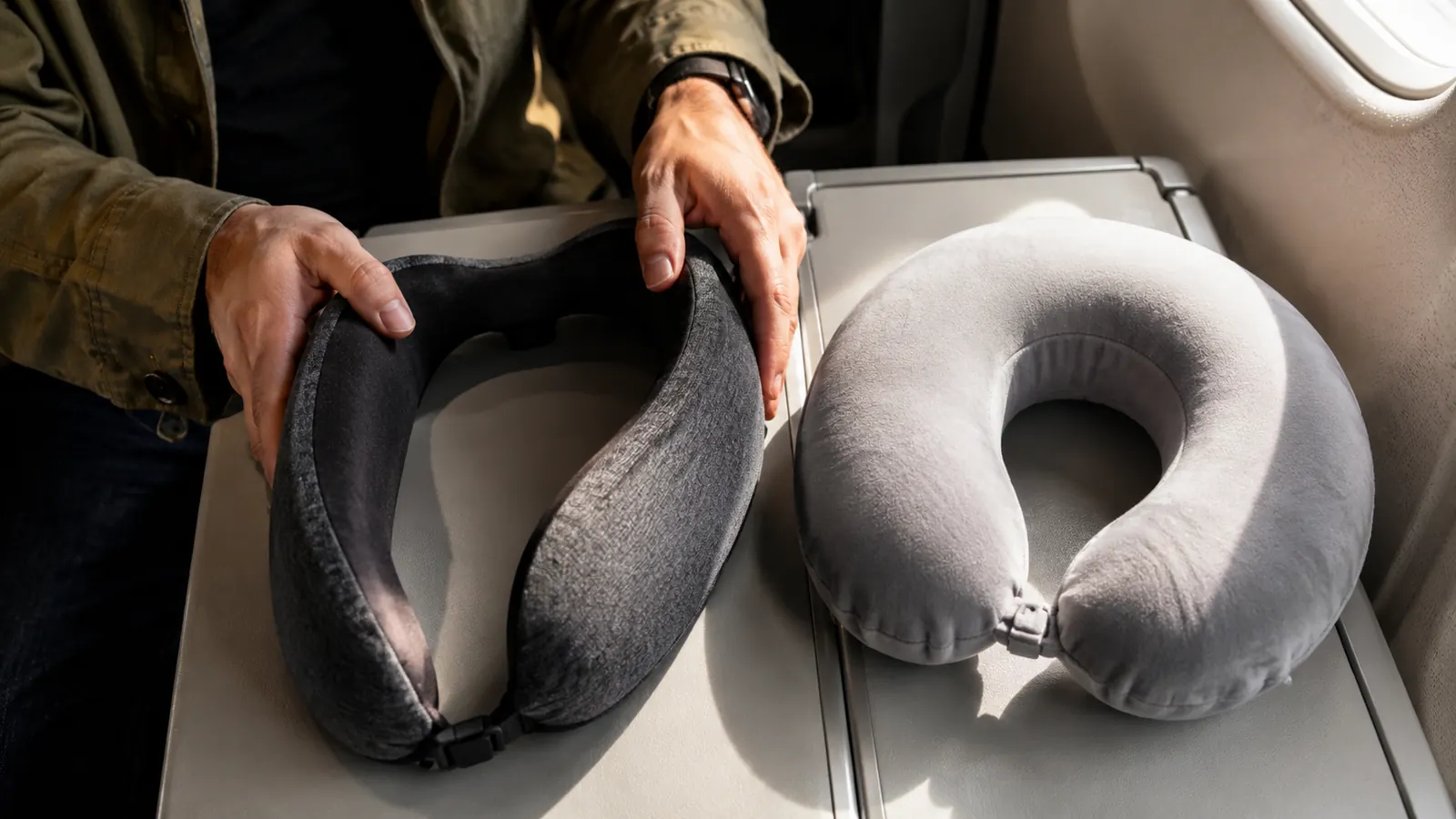
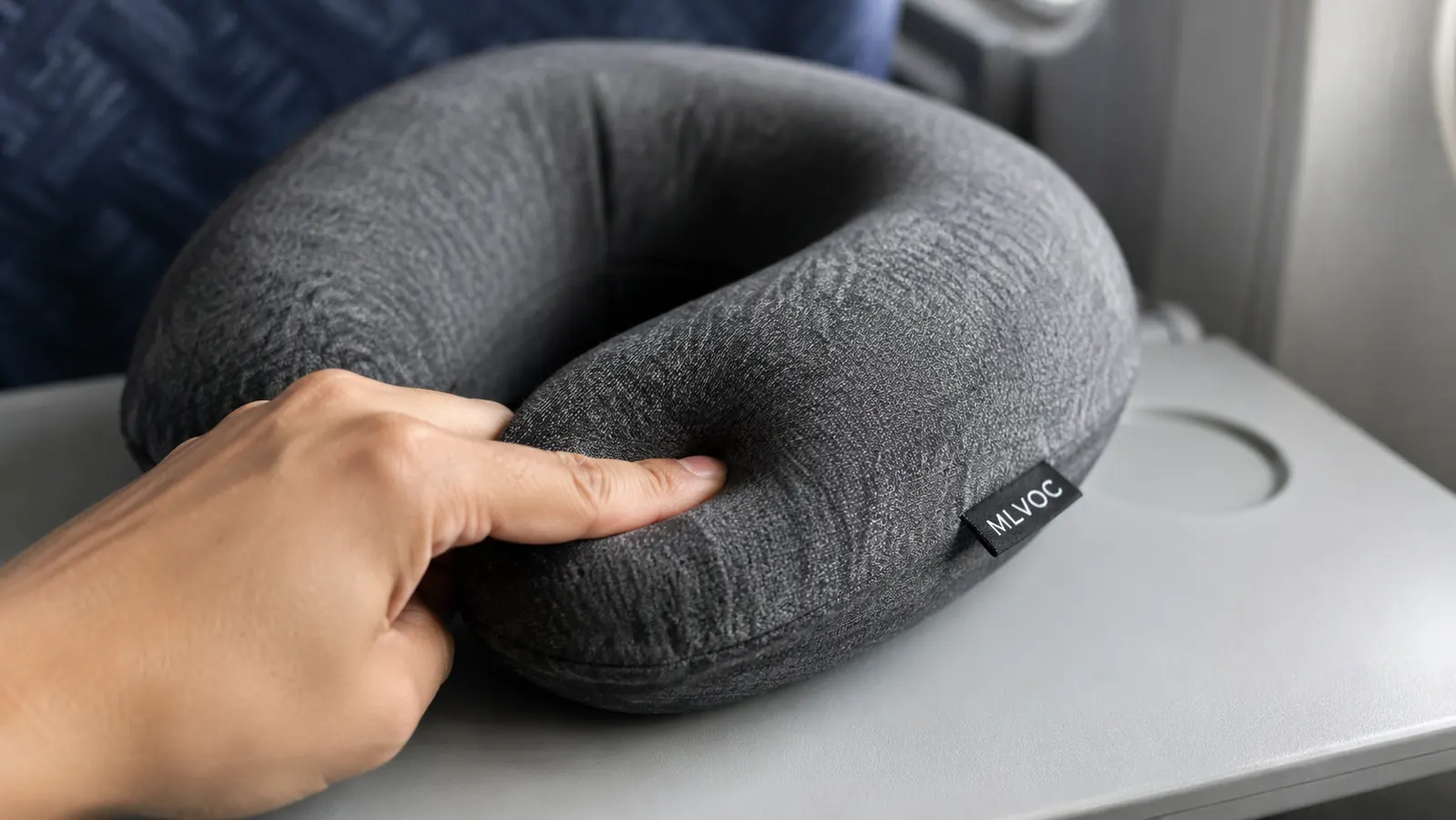
Short answer: if you're choosing between a memory foam neck pillow and an inflatable travel pillow, the memory foam wins for actual sleep quality on flights over two hours. The inflatable wins for packed size and nothing else. I own both. I've flown with both. The MLVOC memory foam pillow is the one that's still in my carry-on three years later, and the inflatable one is folded up in a drawer I forget exists until I'm looking for something else to shove in there.
This isn't a knock on inflatables as a category. They solve a real problem, which is bulk. A memory foam pillow takes up space you don't have on a budget airline's carry-on allowance, and that matters more than people admit until they're standing at the gate trying to zip a bag that's two inches too full. But packed size is one variable out of five that actually matter for a red-eye, and it's the only one where inflatable pillows win.
I put both types through the same trip more than once before writing any of this down. Same route, same seat class, same time of night, swapping pillows on the return leg so the comparison wasn't just a gut feeling. That's the only fair way to judge gear like this, because a pillow that feels fine sitting on a couch in your living room can fall apart completely three hours into a cramped economy seat with the person in front of you reclined.
| Memory Foam Neck Pillow | Inflatable Travel Pillow | |
|---|---|---|
| Product | MLVOC Memory Foam Neck Pillow | Standard Inflatable Travel Pillow |
| Material | Slow-recovery memory foam, velour cover | PVC or TPU air bladder, thin fabric shell |
| Packed size | Compresses to about the size of a rolled sweater | Flat and thin, fits in a seat pocket |
| Setup time | None, wear it straight out of the bag | 30-60 seconds of blowing it up by mouth or valve |
| Neck support | Holds shape all flight, curved chin support | Softens as body heat warms the air inside |
| Included extras | 3D contoured eye mask and earplugs in the same kit | Usually sold alone, no accessories |
| Durability | Machine washable cover, foam holds up for years | Seams and valves are the first thing to fail |
| Today's price range | Mid-range, one-time purchase | Budget-friendly upfront |
Where the Memory Foam Pillow Wins
The whole point of a neck pillow is to keep your head from doing that slow-motion bobble toward the aisle every time you drift off. Memory foam does that because it holds its shape under sustained pressure. I've done the New York to Los Angeles run more times than I want to count, and on the flights where I wore the MLVOC pillow, I woke up with my neck in roughly the same position I fell asleep in. That's the whole job. If you want the long version of how it performed over repeated flights, I wrote up the full breakdown in my long-term MLVOC neck pillow review.
The curved design on the MLVOC also does something inflatables generally don't, which is support your chin. If you've ever woken up on a flight with your mouth hanging open and a stiff jaw, that's a chin-support problem, not a neck-support problem. The foam cup under the chin keeps your head from tipping forward, which is the direction most people actually fall asleep in, not sideways like the marketing photos always show.
It also comes as a kit, not just a pillow. The eye mask and earplugs that ship with it aren't an afterthought, they're part of why it works. A neck pillow without light blocking is only solving a third of the problem, because a cabin with the window shades up at 6 a.m. local time is going to win the fight against your eyelids no matter how good the pillow is. I go into why that combination matters more than people expect in 10 reasons a neck pillow actually helps you sleep on flights.
There's a texture difference too that doesn't show up in a spec sheet. The velour cover on the MLVOC doesn't stick to your skin or squeak against a seat headrest the way vinyl-covered inflatables can. It's a small thing until you're four hours in and every shift of your head makes a noise loud enough that the person next to you notices. Fabric that behaves like fabric, instead of plastic that behaves like plastic, is a comfort detail that only shows up over a long flight, not in a five-minute store test.
The clip on the back of the MLVOC pillow is another detail I didn't expect to care about. It hooks the pillow to a bag strap or a rolling suitcase handle, so it's not the loose thing rattling around a backpack that you dig through at the gate. Little as it sounds, that's the difference between grabbing it in one motion as you board and holding up the boarding line while you paw through a bag.
Where the Inflatable Pillow Wins
Packed size, full stop. If you're flying a budget carrier with a strict personal-item limit, or you're backpacking and every cubic inch of your bag is already spoken for, an inflatable pillow deflates down to something you can slide into a side pocket without thinking about it. That's a real advantage and I won't pretend otherwise. For a two-week trip where the neck pillow is a nice-to-have and not the main event, some travelers will reasonably choose the smaller footprint.
The other point in its favor is upfront cost. Inflatable pillows are usually the cheapest option on the shelf, and for someone who flies once a year, that math might make sense. But cheap gear that fails after a handful of trips isn't actually cheap, it's just deferred cost. I'll get into that in the next section.
Inflatables also pack flat enough to slide into the seat-back pocket in front of you without competing for space with your book, your headphones, and whatever snack you smuggled past the flight attendants. If your travel style is minimalist and you're not counting on the pillow to do heavy lifting, an inflatable is a perfectly rational choice for that one trip. It's the frequent flier and the red-eye traveler this comparison is really written for, more than the once-a-year vacationer, that stands to lose the most by picking the wrong one.
Stop Losing Sleep to a Pillow That Deflates by Hour Two
The MLVOC memory foam pillow holds its shape for the whole flight and comes with the eye mask and earplugs already in the kit. See today's price on Amazon and check current availability.
Amazon Check Today's Price on Amazon →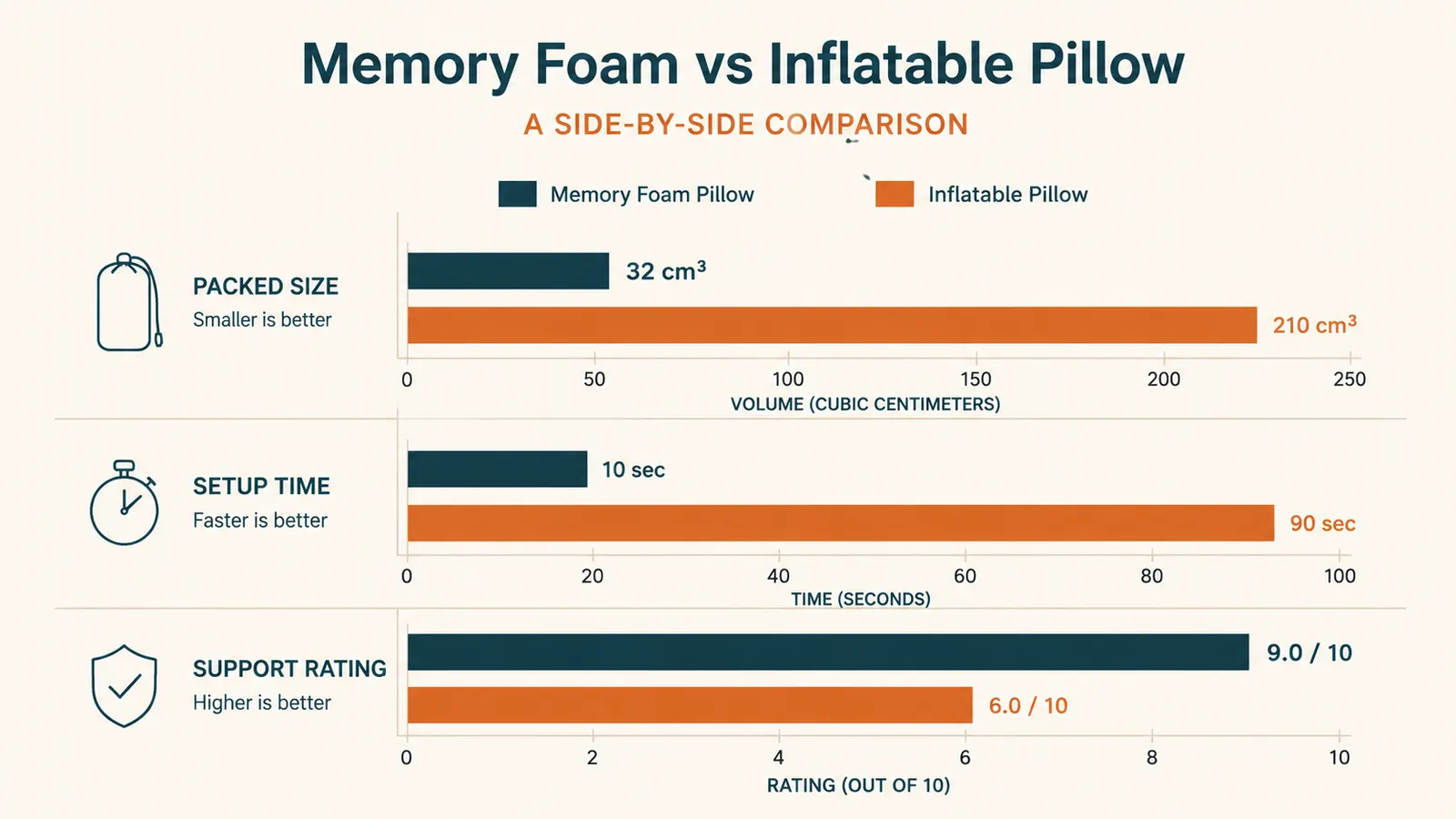
The Failure Points Nobody Mentions
Every inflatable pillow I've owned has died the same way. The valve stops sealing, or a seam gives out after being crammed into a bag pocket for a few trips, and one day you go to blow it up and it just won't hold air. It's not a matter of if, it's when. I've had this happen on the way to a gate with no time to troubleshoot it, which meant I flew a five-hour leg with nothing. That's the real cost of the inflatable, it's not just softer support, it's support that can vanish entirely mid-trip.
There's also the body heat issue. Inflatable pillows use trapped air, and trapped air warms up against your skin over the course of a flight. What starts firm at boarding gets noticeably softer by hour three, right when you actually want to fall asleep. Memory foam doesn't have that problem because there's no air to warm, the foam itself is doing the work the entire time.
The memory foam pillow has its own tradeoff, and I'm not going to pretend it doesn't. It's bulkier. If you're a carry-on-only traveler who's already tight on space, clipping it to the outside of your bag is the workaround most people land on, and it works fine, but it's one more thing hanging off your bag at security. For someone comparing this against other packing strategies, my guide to packing a carry-on with packing cubes covers how to make room for gear like this without checking a bag.
There's a hygiene angle too. A foam pillow with a removable, machine washable cover means you're not sleeping on the same fabric trip after trip without cleaning it. Most inflatable pillows have a thin cover that either doesn't come off or doesn't hold up to a real wash cycle, so it just gets wiped down at best. If you fly often enough that this pillow is doing real work every month, that difference adds up.
An inflatable pillow that fails at 30,000 feet isn't a small pillow, it's no pillow at all.
Who Should Buy Which
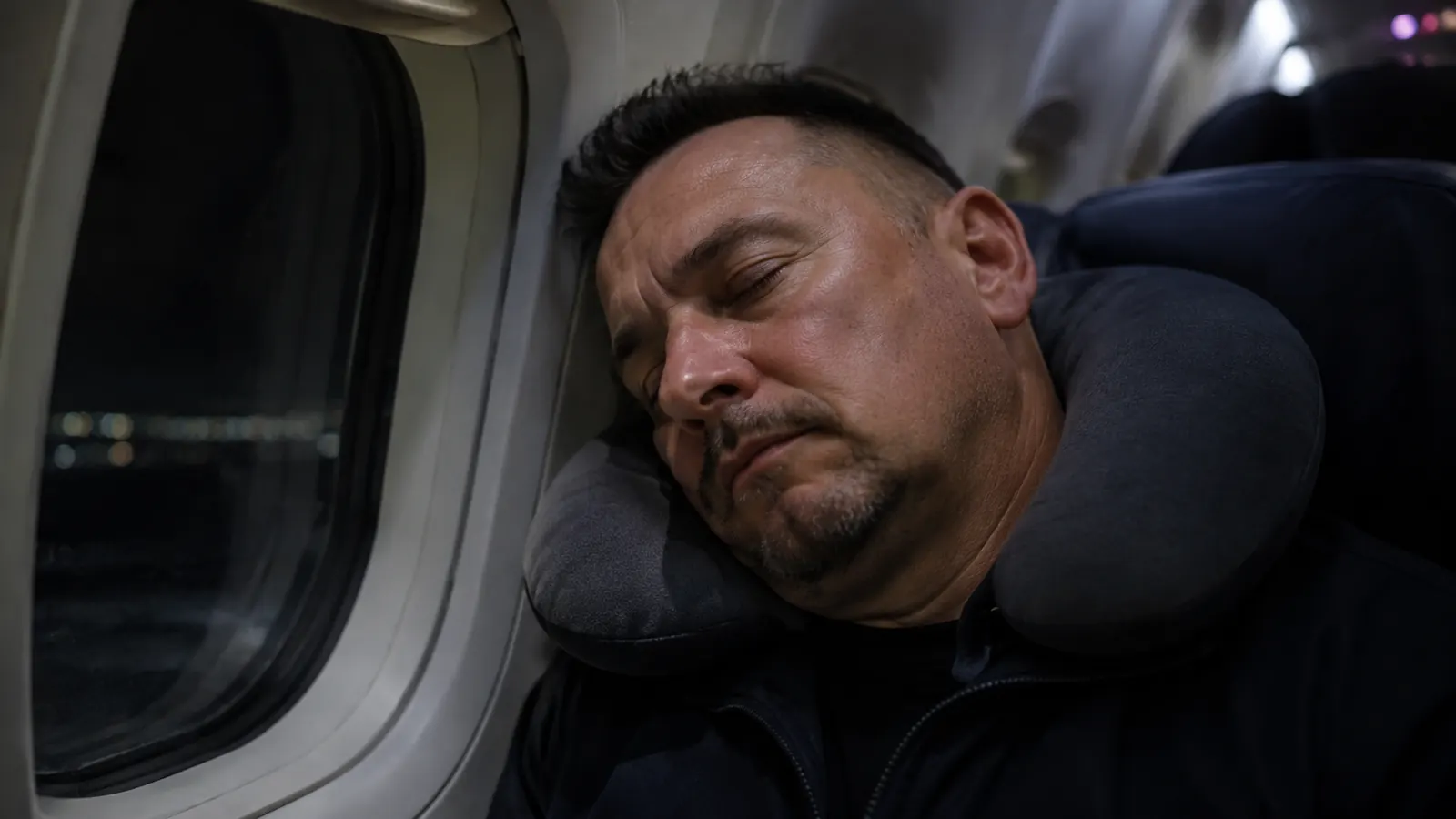
If you fly more than a couple of times a year, take red-eyes, or you're the kind of traveler who actually needs to sleep on the plane and not just rest your eyes for twenty minutes, get the memory foam pillow. The MLVOC kit in particular earns its spot in a carry-on because it's not just a pillow, it's a sleep kit, and the eye mask alone changes how fast you fall asleep on a lit-up cabin. If you want the unfiltered version of what it's actually like day to day, including the parts that annoyed me, I laid it out in my honest MLVOC neck pillow review. And if the real question isn't which pillow but how to sleep at all on a long flight, I put the full approach together in how to sleep better on long flights, which covers seat choice and timing along with the gear.
If you're an occasional flier, backpacking with a single small bag, or you genuinely cannot spare the space a foam pillow takes up, an inflatable is a reasonable budget choice. Just don't expect it to still be sealing air after a dozen trips, and don't count on it for a flight where sleep actually matters, like the overnight leg before a big meeting or a long drive the next morning. For that flight, you want something that holds its shape no matter how many hours you're in the seat.
My own rule after enough trips to lose count: pack the inflatable if the bag is genuinely full and the flight is short. Pack the memory foam every other time. Most travelers fall into the second group more often than they think, because it's not the two-hour hop that wrecks your neck, it's the red-eye you didn't plan around. And once you've picked the pillow, the rest of your carry-on kit matters more than people expect, which is the whole reason I keep circling back to how these pieces of gear work together instead of reviewing them in isolation.
Pick the Pillow That's Still Working on Flight Twenty
The MLVOC memory foam neck pillow, eye mask, and earplugs kit is built to outlast a season of travel, not one trip. Check today's price and current stock on Amazon.
Amazon Check Today's Price on Amazon →