
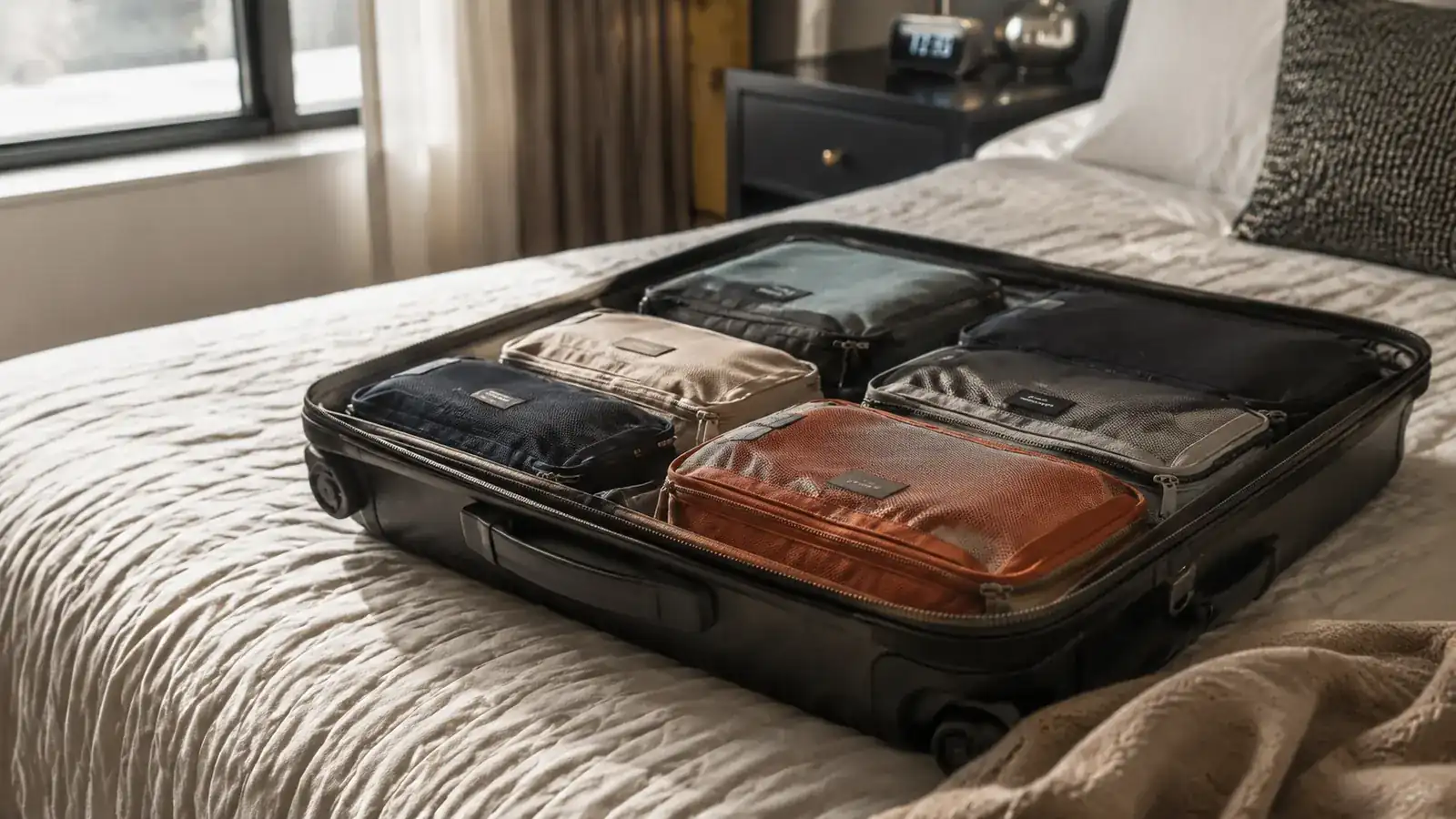
I used to be the guy holding up the TSA line, kneeling on the floor of the security checkpoint trying to zip my carry-on shut because I'd shoved everything in loose and hoped for the best. Sound familiar? After a few too many trips like that, including one memorable scramble through Charlotte with a flight attendant tapping her watch, I switched to packing cubes and never looked back. The eight-piece BAGAIL set is what sits in my suitcase now on every trip, from weekend drives down to the coast to two-week hauls overseas, and it's the difference between a carry-on that closes on the first try and one that fights you the whole way.
This isn't a review, it's a method. I'm going to walk you through exactly how I pack a carry-on with packing cubes, step by step, the same way I've done it for close to 40 trips now. You don't need my exact set to follow along, packing cubes are packing cubes at the core, but I'll point out where the right sizes and the right fabric make the process easier instead of harder. If you're still deciding which set to buy, I broke down my time with this one in my honest review after 20-plus flights, but for now, let's get your carry-on packed.
The biggest mistake I see, and the one I made for years, is packing for every scenario instead of the actual trip in front of you. A second pair of dress shoes, a jacket for weather that never shows up, three chargers for devices you're not bringing. None of that fits when your carry-on has a hard shell and a hard limit. Packing cubes don't create space out of thin air, they just make it obvious how much space you actually have once you stop guessing.
Stop Fighting Your Zipper
The BAGAIL 8-piece set is the exact system I use in this guide, sized right for a carry-on and built to actually compress instead of just organizing.
Amazon Check Today's Price on Amazon →Step 1: Sort Your Gear Before You Touch the Suitcase
Before I ever unzip a packing cube, I lay everything out on the bed and sort it into piles: tops, bottoms, underlayers, and the stuff that doesn't fit anywhere else, like a swimsuit or a rain shell. This sounds basic, but skipping it is why most people overpack. When you can see everything at once, you catch the third black t-shirt you don't need before it ends up in your carry-on.
I also separate by trip leg. A four-day work trip doesn't need the same wardrobe as a ten-day family road trip through small-town America, so I ask myself how many of each item I actually need, not how many I own. Two pairs of jeans covers a week if you're washing at all. One good jacket beats three mediocre ones.
One trick that saves real space: pick two or three colors and build the whole trip around them. When every shirt pairs with every pair of pants, you can pack fewer total items and still show up looking put together. It also makes sorting faster, since you're not trying to remember which shirt goes with which pants while you're half asleep at six in the morning.
Once the piles are sorted, matching them to packing cubes is easy. I use the medium cubes for tops, the large cube for bottoms and layers, and a slim cube for anything flat like belts or a folded jacket. Sorting first means you're not stuffing a cube halfway through packing and realizing it's already full.
Step 2: Pick the Right Size Cube for the Job
Not every packing cube in a set is meant for the same job, and using the wrong size is where a lot of people give up on the whole system. The 8-piece BAGAIL set gives you a spread, from small mesh-top cubes for socks and cables to a full-size cube built for bulkier clothes, and matching the item to the cube keeps everything from turning into one lumpy mess. I go deeper on how this set has held up over three months of real trips in my long-term review.
For a standard carry-on, I run two medium cubes, one large cube, and two small cubes. That combination covers a week of clothes without leaving dead space. If you're only gone two or three days, you can drop down to one medium and one small and still have room in the suitcase for a jacket or a pair of shoes.
The mesh top matters more than people think. I can see exactly which cube has my workout shirts without unzipping every one of them at a hotel counter at eleven at night. That's a small thing until you're the guy pulling clothes out of four different bags trying to find a clean shirt for a morning meeting.
Zipper quality matters too, more than most people think about when a set is new. I've had cheap packing cubes split a seam on the second trip because the zipper pull tore straight through thin fabric. A double-zipper pull and a reinforced seam is a small detail that decides whether a set lasts one summer or five years of regular use.
Step 3: Roll, Don't Fold, and Fill for Compression
Fold your clothes and you waste space. Roll them and you get two things at once: more room and fewer wrinkles. I roll everything, t-shirts, pants, even collared shirts, tight enough that they hold their shape but not so tight I'm wringing them like a towel.
For collared shirts specifically, I button the top button, lay it face down, fold the sleeves back, then roll from the bottom hem up. It takes an extra ten seconds and it's the difference between a shirt you can wear straight out of the cube and one that needs an iron before a meeting.
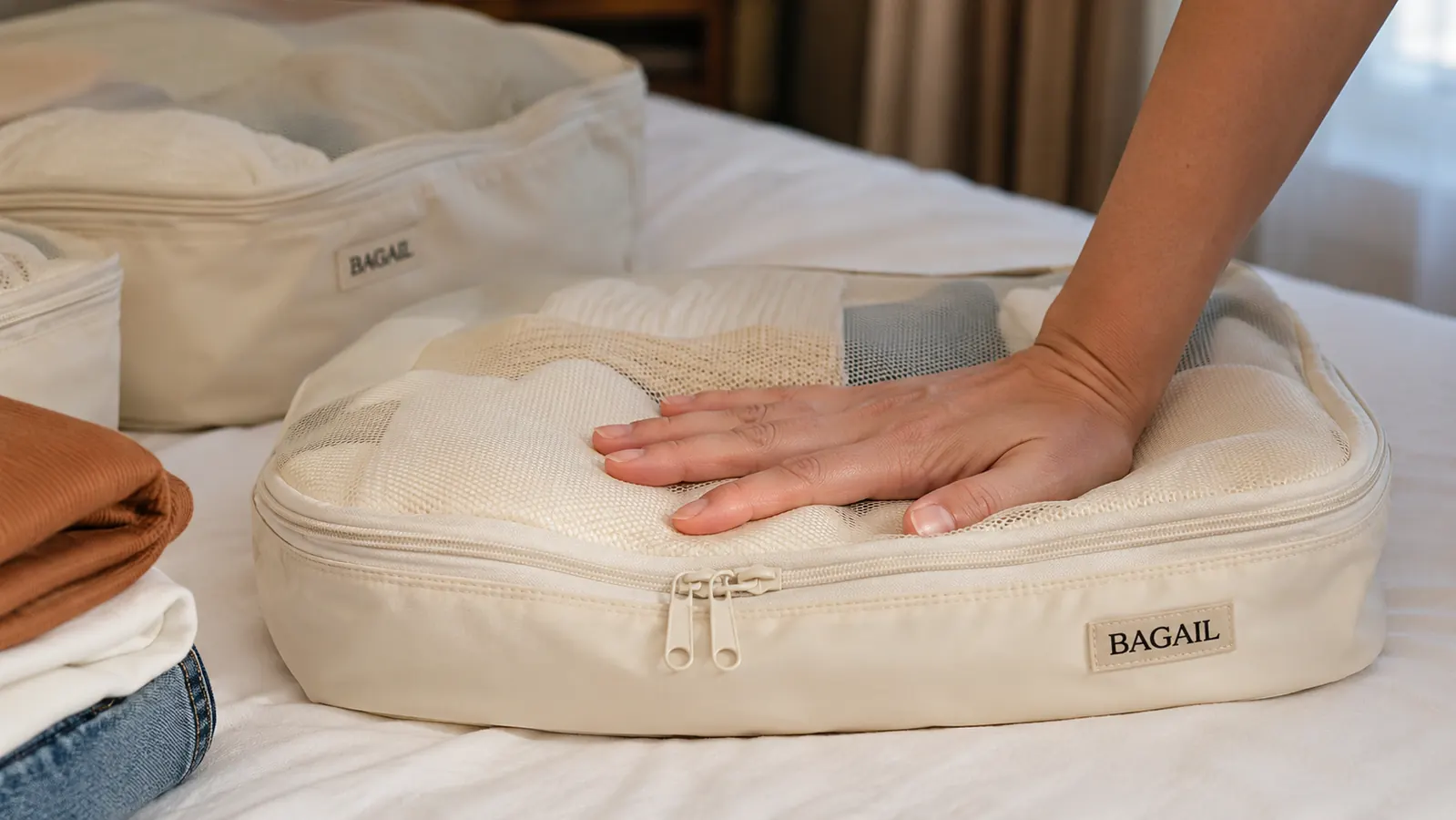
Once the rolls are in the cube, this is where packing cubes actually do their job. Zip the cube most of the way, press down on the stack with your palm to push the air out, then finish zipping. You'll feel the cube go from puffy to flat, and that's the compression doing the work, not just the organization.
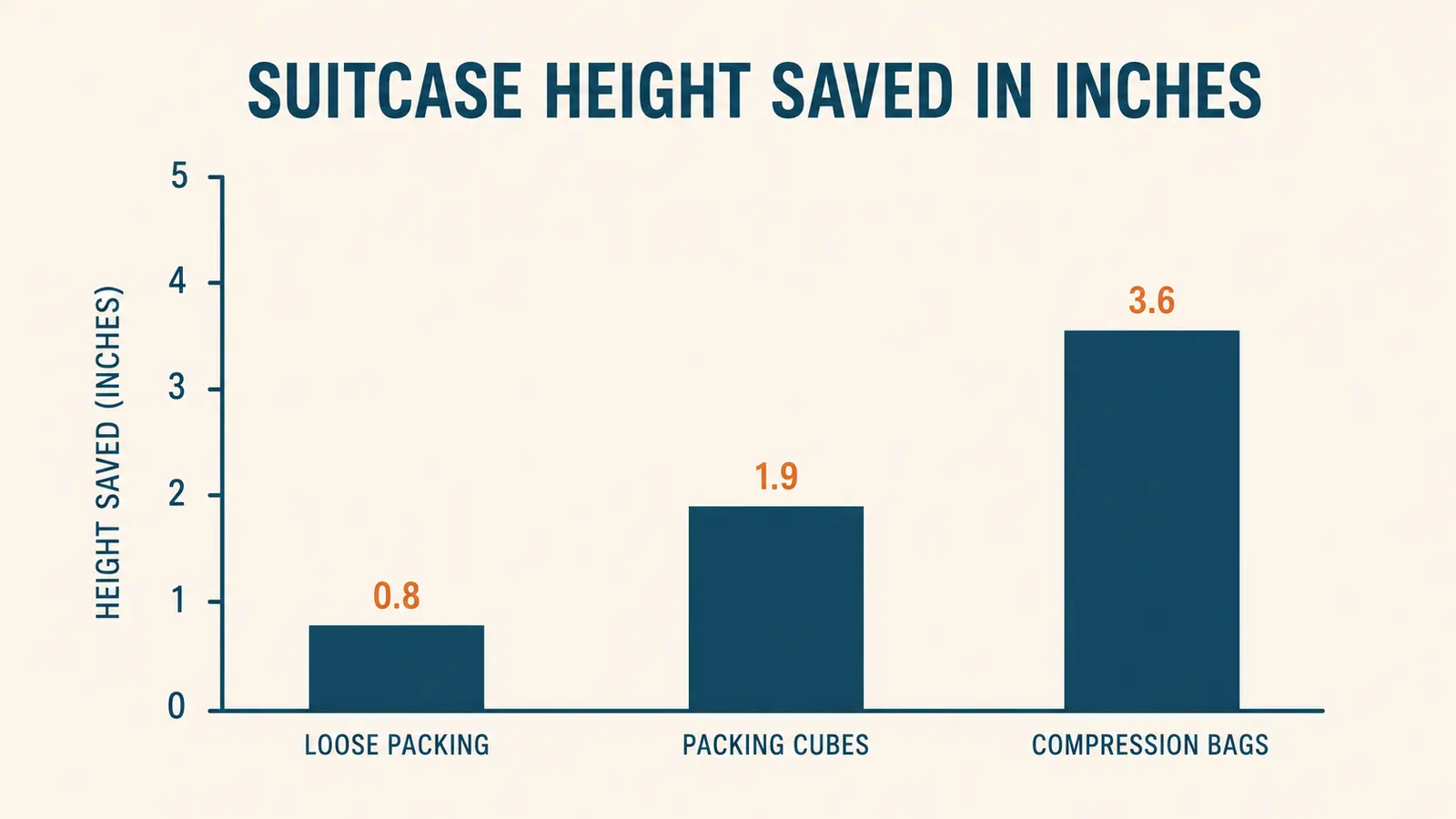
This step is why packing cubes beat loose packing or even basic zippered bags. A cube that's compressed properly can shave two or three inches of height off your stack, which on a carry-on with a hard 22-inch limit is the difference between a bag that latches and one that doesn't. If you want the harder numbers on this, I ran packing cubes against straight compression bags in a side-by-side comparison and the results surprised me.

Step 4: Stack Cubes by Weight and Layer the Carry-On
Once your cubes are packed and compressed, how you stack them in the suitcase matters almost as much as what's in them. Heavy cubes go on the bottom, near the wheels if your carry-on has them, so the bag doesn't tip over when you set it down or wheel it through an airport.
I lay the large cube flat across the bottom, then stack the medium cubes on top of it like bricks, not directly on top of each other but offset so there's no wasted gap between them. The small cubes fill in the corners and the space along the shorter side of the suitcase.
Hard-shell and soft-shell carry-ons pack a little differently. A hard-shell case has fixed dimensions, so compression matters more since there's zero give in the walls. A soft-shell bag will flex and bulge a little, which is forgiving, but it also means an unevenly packed bag can end up lopsided on the belt or hard to wheel straight. Either way, the same stacking order applies.
Leave the top layer for what you'll need fast: a light jacket, your toiletry bag, a paperback for the flight. You don't want to be digging through four packing cubes at airport security or on a layover just to find your phone charger. Keep that top layer loose and accessible.
Step 5: Handle the Odd Stuff, Shoes, Toiletries, and the Just-In-Case Pile
Shoes go in first or last depending on your suitcase shape, but they never go loose against your clothes. I use a plastic bag or a dedicated shoe pouch and tuck them into a corner, soles facing out toward the suitcase wall so they're not pressed against anything you're wearing.
Toiletries get their own bag, always. Packing cubes aren't built for liquids, and you don't want a leaking bottle of sunscreen finding its way into your rolled shirts. Keep a separate hanging bag for that side of the packing job, it's worth sorting out before your next TSA line.
The just-in-case pile, the extra charger, the granola bars, the phone cords, gets its own small cube, always the same one, always in the same spot in the suitcase. When you're not hunting for these things every trip, packing gets faster every single time you do it.
One thing I didn't expect when I started using packing cubes: they make the trip home easier too, not just the trip out. I keep one cube empty on the way there, just for dirty laundry on the way back. It sounds small, but it means my clean clothes and worn clothes never touch, and repacking a hotel room in fifteen minutes before checkout doesn't turn into a mad scramble. If you travel enough that laundry mid-trip becomes a regular thing, that one empty cube earns its keep more than almost anything else in the bag.
What Else Helps
Packing cubes solve the organization problem, but they work best alongside a few other habits. Wear your bulkiest item, usually a jacket or boots, instead of packing it. Pack a small laundry bag so dirty clothes don't mix with clean ones halfway through the trip. And weigh your bag before you leave the house if you're anywhere close to airline limits.
A power bank in your personal item is worth the ounce it weighs, especially on a long layover with every outlet at the gate already taken. And if you're checking a second bag on longer trips, a decent lock keeps the zippers from wandering open on the belt. Neither replaces packing cubes, they just round out a system that already works.
I also keep a simple pre-flight checklist taped inside my carry-on lid: passport, charger, meds, cube count. It takes ten seconds to run through before I zip the bag shut for the last time, and it's caught more than one forgotten toothbrush over the years. None of this replaces good packing cubes, but a system only works if you actually follow it every single trip, not just the ones where you remember to care.
If you're curious just how much room packing cubes actually free up compared to packing loose, I laid out the math in ten reasons packing cubes save suitcase space. It's not marketing fluff, it's just what I've measured trip after trip, cube by cube, one carry-on at a time.
A carry-on that closes on the first try isn't luck. It's a system, and packing cubes are the backbone of it.
Pack It Once, Pack It Right
Grab the same 8-piece BAGAIL set I used to build this method and stop repacking your carry-on twice before every flight.
Amazon Check Today's Price on Amazon →