
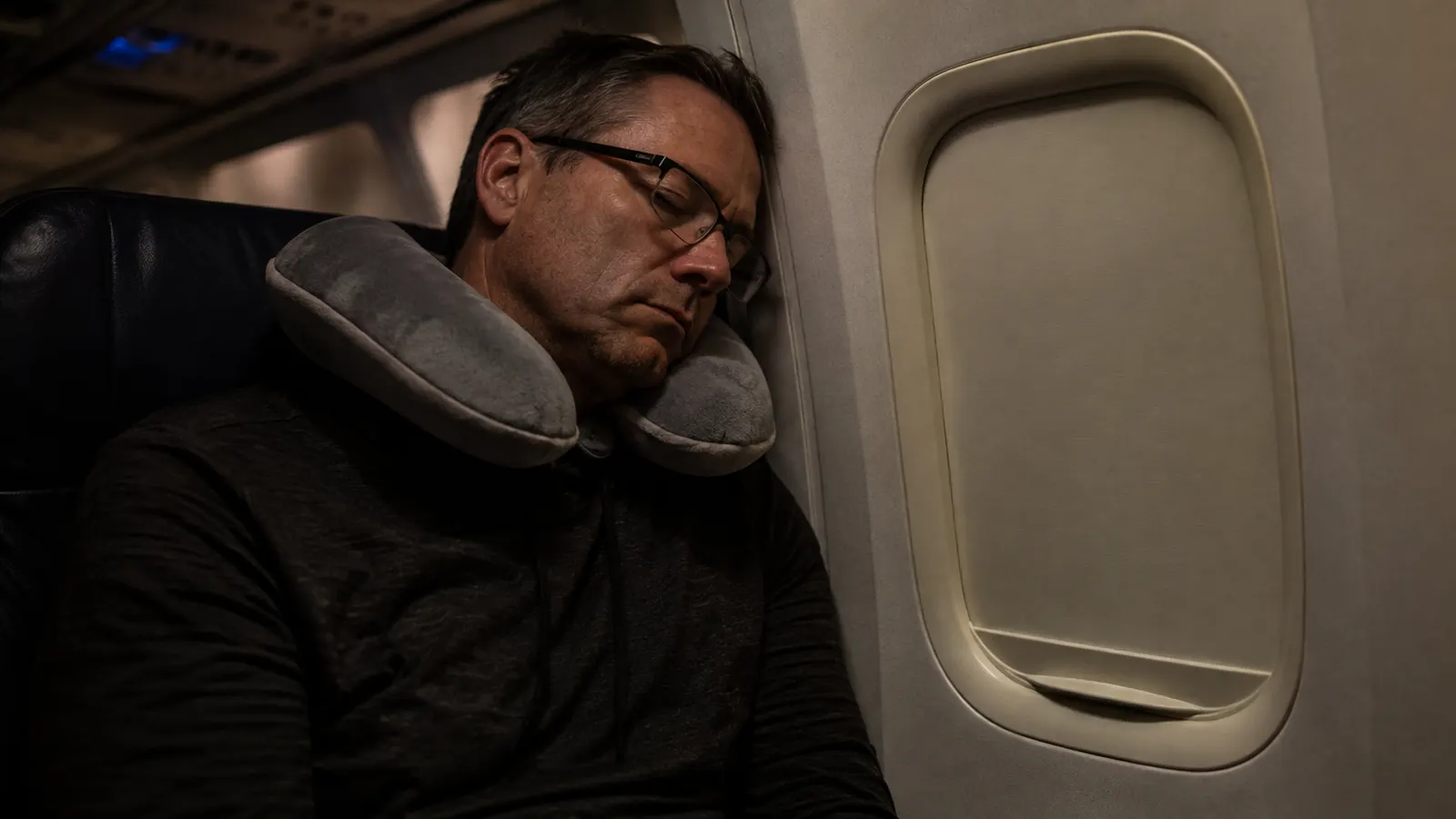
I've flown enough overnight legs to know the difference between a flight where you land ready for the day and one where you land needing a nap before you can even function. The gap between those two outcomes usually comes down to three or four decisions you make before you ever board, not some trick for once you're in the seat. I run a memory foam neck pillow on every long flight now, and it's part of the system, but it's only one piece. The seat you pick, the light you block, and the timing of when you eat and when you don't all matter just as much.
This is the exact method I use to actually sleep on a red-eye or a long-haul flight, step by step, not theory from an app I've never opened at 35,000 feet. None of it requires spending money you don't have, and most of it works whether you're flying economy in a middle seat or stretched out with an extra inch of legroom. A good neck pillow is the one piece of gear worth buying if you don't already own one, and I'll get into exactly why in step two. Everything else here is technique.
Stop landing wrecked from every red-eye
A curved memory foam neck pillow with a built-in eye mask and earplug kit is the single biggest upgrade in this guide. See today's price before your next overnight flight.
Amazon Check Today's Price on Amazon →Step 1: Pick a Seat Like You Actually Plan to Sleep In It
Not every seat sets you up the same for sleep. A window seat gives you a wall to lean against and nobody climbing over you to get to the aisle, which matters more than legroom once the cabin lights go down. If you can't get a window, an aisle at least lets you get up without waking two strangers, and a bulkhead row with nothing under the seat in front of you gives your knees somewhere to go instead of pinning you into a slump.
I check the seat map before I book when I can, and I look past just window versus aisle. Rows near the galley or the lavatories stay noisy and lit up long after the rest of the cabin goes dark, and a seat right under a reading light someone forgets to turn off is its own kind of misery. A few extra minutes picking your seat does more for actual sleep than almost anything you can buy.
Overnight flights aren't automatically better for sleep just because it's dark outside. A red-eye lines up with your body's own clock, which helps, but a daytime long-haul with the window shade down and a neck pillow in place works almost as well if a red-eye isn't an option on your route. What matters more than the clock on the wall is whether you actually set the conditions for sleep once you're in the seat, not just hoping the darkness outside does the work for you.
If you're stuck in a middle seat with no way around it, don't fight it, plan for it. That's exactly where a neck pillow earns its keep, because you won't have a wall or a window to lean on, just your own neck holding your head up for six hours straight.
Step 2: Get Real Neck Support Before You Try to Close Your Eyes
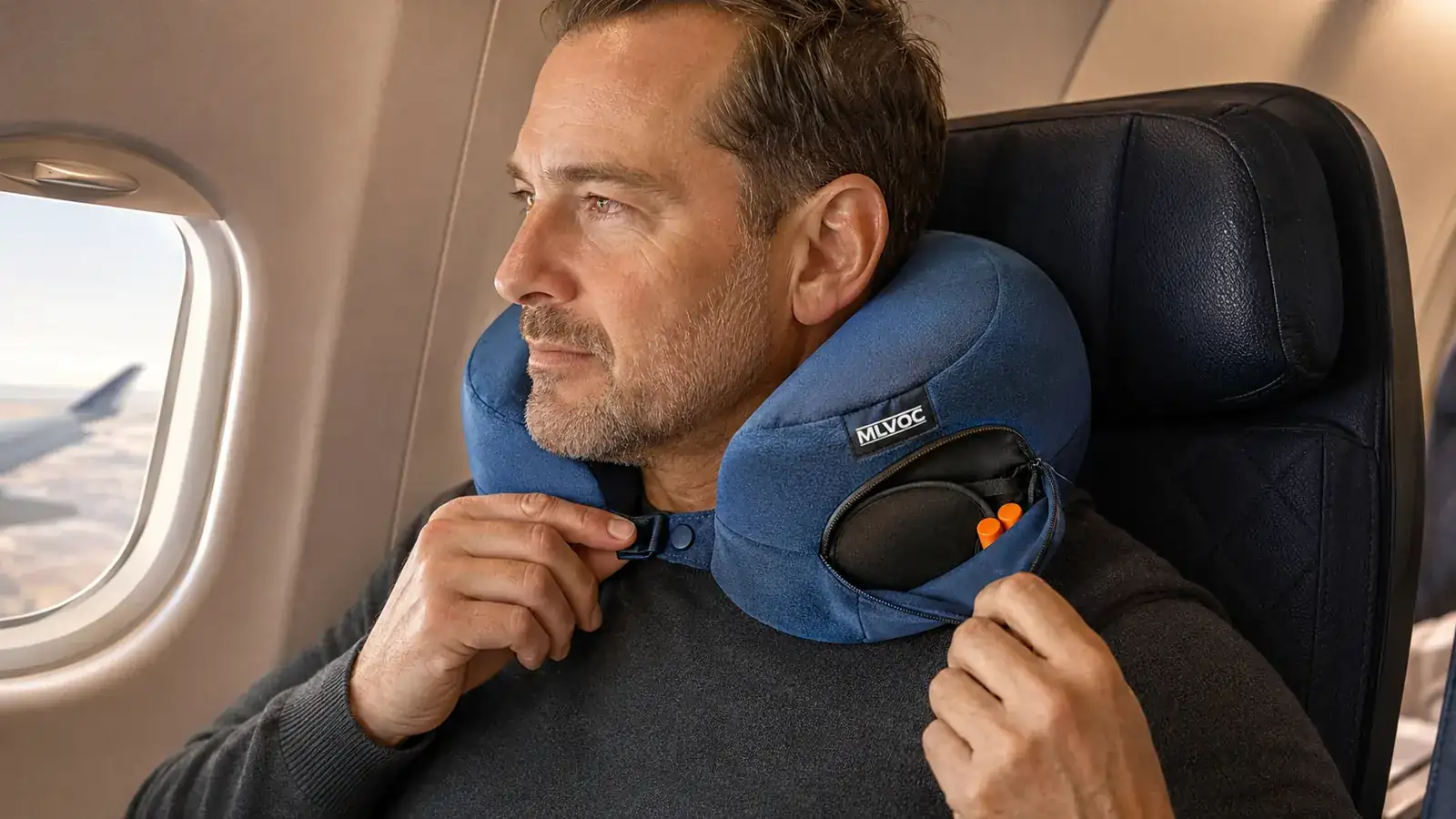
This is the step people skip and then wonder why they can't sleep sitting up. Your neck has nothing to lean on in an airplane seat, so the second you actually start to drift off, your head drops and jerks you right back awake. It happens over and over until you give up trying. A real neck pillow, not the flat horseshoe shape from the airport gift shop, braces your head from both sides so it has somewhere to rest instead of nowhere.
I switched to a curved memory foam neck pillow a while back and it changed how much of a long flight I actually sleep through instead of just enduring. The memory foam holds its shape for the whole flight instead of flattening out an hour in, and the chin support keeps your head from tipping forward, which is the move that usually wakes you up rather than dropping to the side. If you want the long version of how one has held up for me over six months of red-eyes, I wrote the whole thing up in that review.
Not every neck pillow works the same way, and if you're deciding between the memory foam kind and the inflatable kind that packs down flatter, I put the two head to head in memory foam versus inflatable travel pillows. Short version, inflatable packs smaller but goes soft fast, memory foam takes up a little more space and holds its shape the whole flight. For actual sleep, shape retention wins.
Step 3: Block the Light and the Noise Before Your Brain Gets a Vote
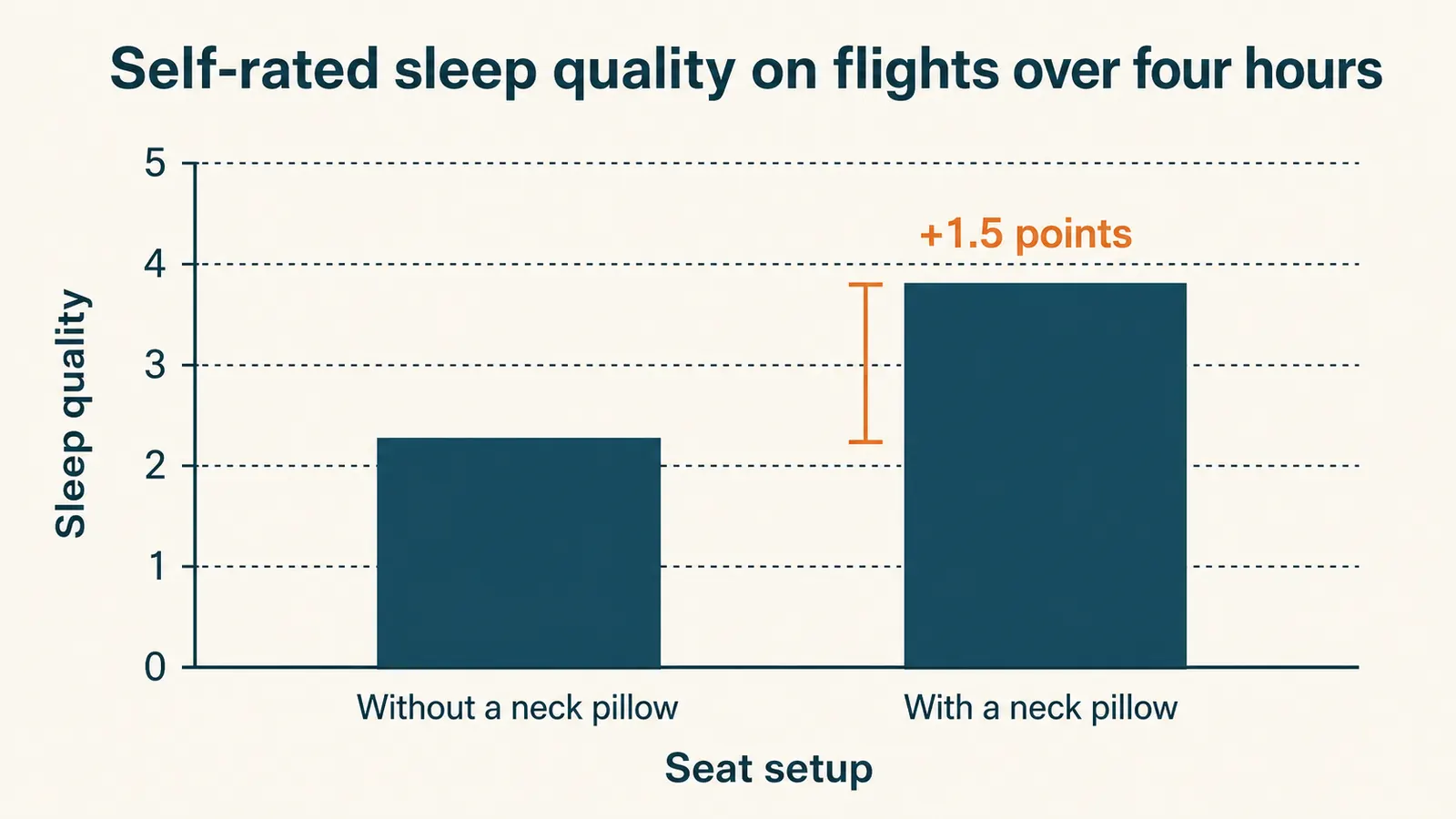
You can have the best neck pillow in the overhead bin and still not sleep if the cabin lights are on your eyelids and the engine drone is keeping half your brain awake. Light and sound are the two things your body reacts to whether you're tired or not, so deal with them before you even try to close your eyes, not after you've been staring at the seatback screen for twenty minutes.
An eye mask with a little dome shape over the eyes beats a flat one, because a flat mask presses right against your eyelids and you end up pushing it up your forehead out of pure discomfort by hour two. Foam earplugs knock the engine hum down to something your brain can tune out instead of a constant low buzz keeping you half-alert. The neck pillow I use ships with both built into the kit, which is one less thing to remember to pack separately.
If you've ever had one specific overnight flight that finally convinced you these small things matter, you're not alone, I had mine too. I wrote about the exact flight that changed how I pack for red-eyes in the overnight flight that finally convinced me to buy a real neck pillow, and it's the same reason I don't board a long flight anymore without all three of these pieces together.
Step 4: Work With Your Body Clock Instead of Against It
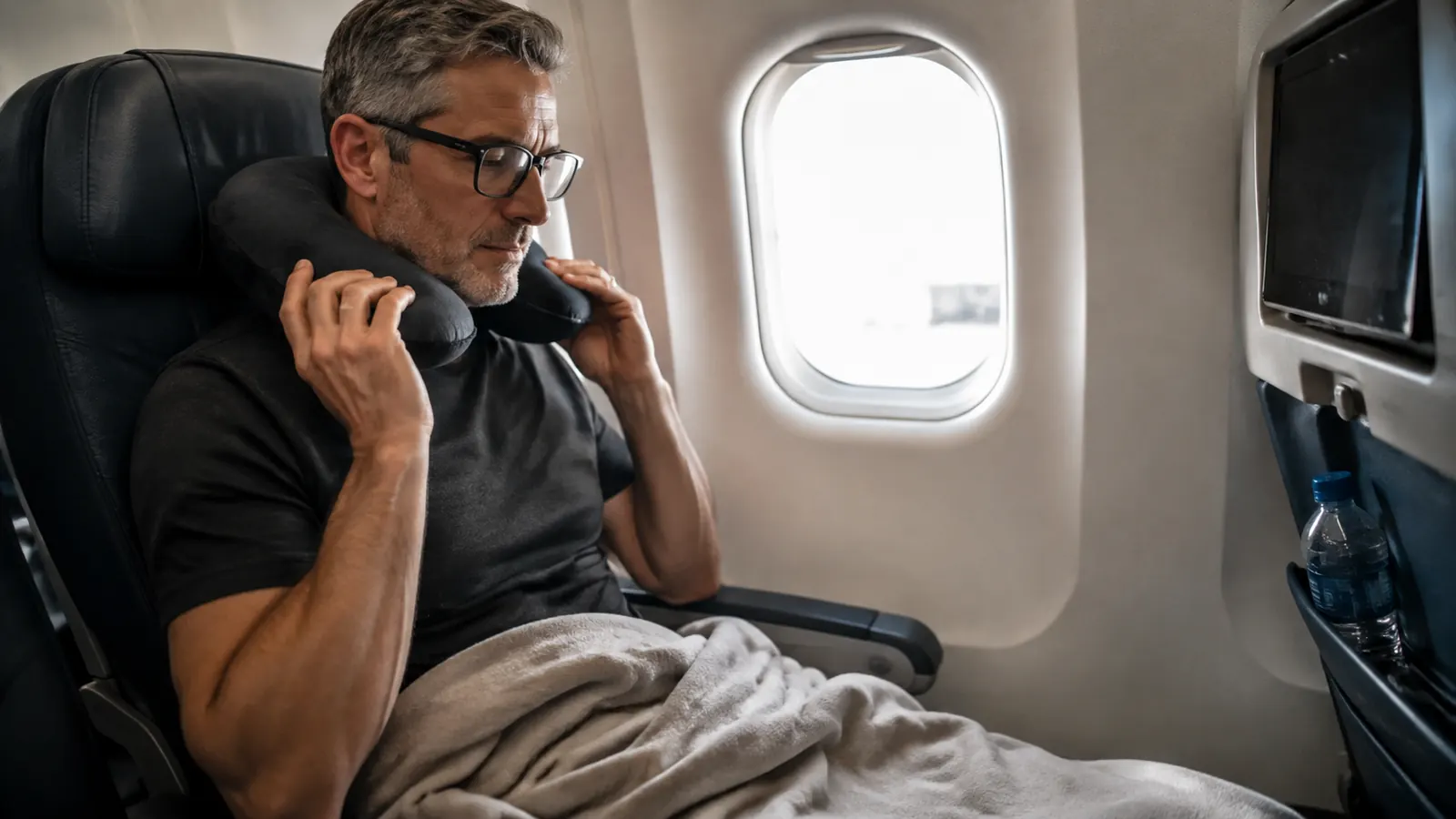
Caffeine after early afternoon on a travel day is working against everything else in this guide. I know a coffee feels necessary at a stressful gate, but if you're trying to sleep on an evening or overnight flight, cut it off hours before boarding. Alcohol feels like it helps you fall asleep faster and it does, for about an hour, then it fragments the rest of your sleep and dries you out in cabin air that's already dry.
Water matters more than people give it credit for. Cabin air runs drier than almost anywhere else you'll spend six hours, and dehydration alone can leave you feeling worn out regardless of how much you actually slept. I bring an empty bottle through security and fill it after, then just keep drinking through the flight instead of waiting until I'm thirsty, which on a plane is already too late.
A short walk around the terminal before boarding does more than people give it credit for too. Sitting in a cramped gate area for two hours and then folding into an economy seat for six more is a rough way to ask your body to relax. I try to get up and move, stretch my legs and shoulders, even just pace near the gate, in the thirty minutes before boarding starts. It's a small habit, but showing up to the seat already a little looser makes the neck pillow and the recline do their job faster instead of fighting a body that's been locked up since the drive to the airport.
If the flight crosses time zones, I try to shift my eating and sleeping to the destination time zone as soon as I board, not when I land. Eating a full meal when it's actually breakfast time where you're headed, even if your body thinks it's the middle of the night, helps reset the clock faster than fighting it for the first two days on the ground.
Step 5: Set Up Your Seat Before You Actually Try to Sleep
Recline as much as your seat and your manners allow, and do it early rather than waiting until the person behind you is mid-meal. A few degrees of recline changes the angle your neck pillow has to work against, and it's easier on everyone around you if you ease back before the cabin lights go down instead of after.
Layer up before you settle in. Cabin temperature swings more than people expect, and shivering awake at two in the morning to dig a hoodie out of the overhead bin undoes twenty minutes of decent sleep. I keep a light layer on my lap from takeoff, not stashed in the bin, so I'm not climbing over a sleeping stranger to reach it.
A footrest, even an improvised one made from your backpack under the seat in front of you, takes weight off your lower back and lets you settle into the neck pillow instead of bracing against the seat the whole flight. It's a small setup, maybe two minutes of fussing before takeoff, but it's the difference between a seat you tolerate and a seat you can actually sleep in.
What Else Helps
None of this replaces the basics, a decent neck pillow, a full water bottle, and a seat you picked on purpose. But a few small habits round it out. Compression socks keep your legs from stiffening up on anything over four hours, which matters for how rested you feel walking off the plane, not just how you slept. Something calm loaded up to listen to, not scroll, gives your brain a runway into sleep instead of a screen doing the opposite job.
A pair of noise-canceling headphones, even basic over-ear ones, stacks well with foam earplugs if the flight is loud enough to justify both. I keep a thin blanket or a packable travel wrap in my bag too, since airline blankets are hit or miss and cabin temperature drops more on a long flight than most people plan for. None of these are required, but they're the kind of small additions that make the difference between tolerating a long flight and actually resting through most of it.
I also stopped treating boarding as the start of the flight. I start winding down in the gate area, easing off my phone, maybe reading instead of scrolling, so I'm not trying to go from wide awake to asleep the second the seatbelt sign turns off. If you want the fuller case for why a real neck pillow specifically pulls its weight on this, I laid out ten reasons here, and if you're still on the fence about whether it's worth packing, the unfiltered version is in the honest review nobody else wrote.
Sleep on a plane isn't luck. It's five decisions made before the seatbelt sign ever turns off.
Land rested, not wrecked
Curved memory foam, real chin support, and a built-in eye mask and earplug kit. Check today's price on the neck pillow that's part of every long flight I take now.
Amazon Check Today's Price on Amazon →