
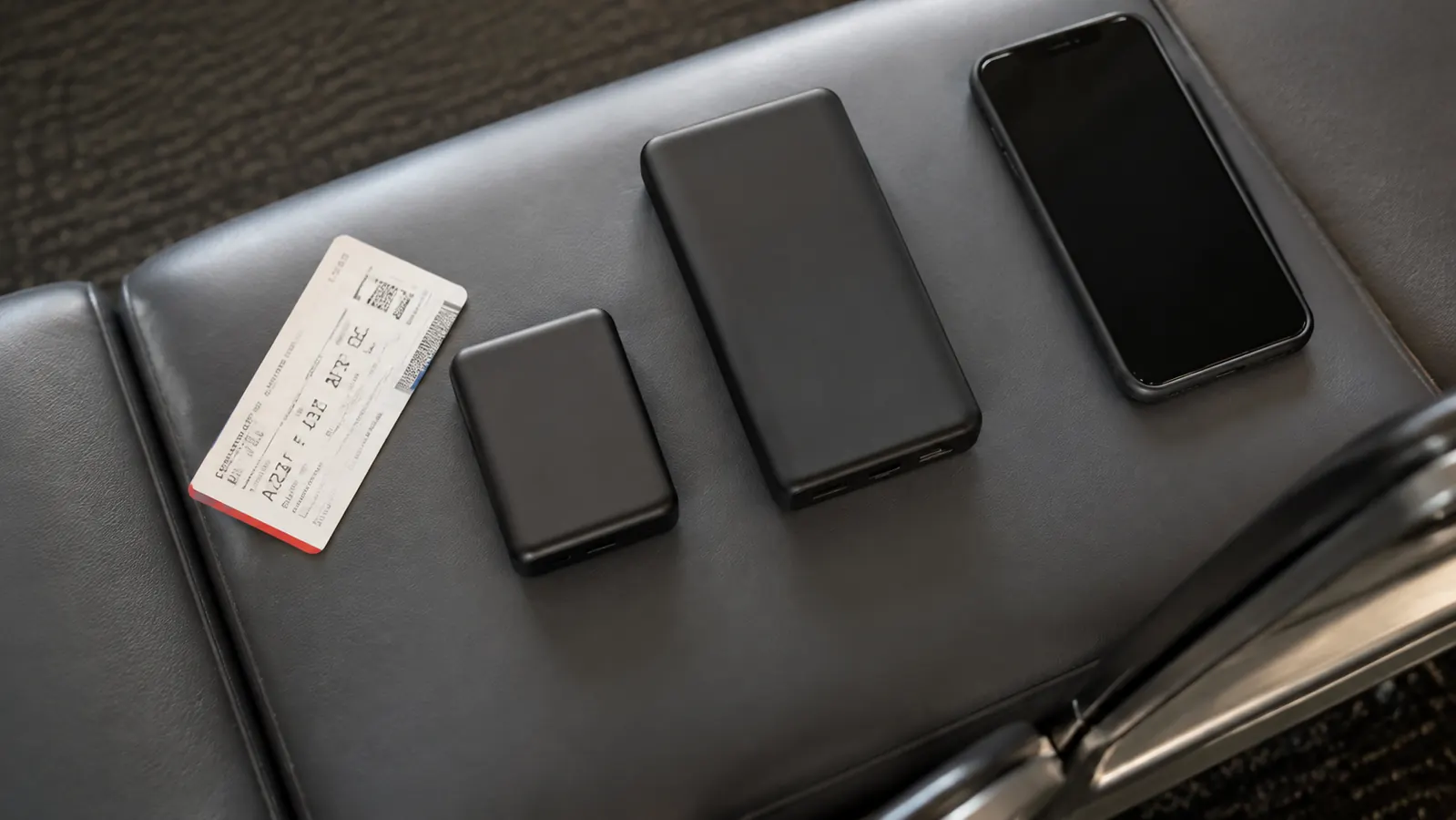
If you just want the short answer: for actual travel, the INIU 45W 10000mAh power bank beats a standard Anker 10000mAh bank on the two things that matter most in an airport, charging speed and how much room it eats in your bag. Anker is not a lesser brand. It's one of the most trusted names in portable power, and there are real situations where I'd still point you toward one of their banks. But INIU built this specific model around the traveler's problem, not the general problem, and that focus shows up every time I'm racing a boarding call with 20 percent battery left and a stack of gate agents telling everyone to finish boarding.
I've used the INIU bank on every trip for months, and I borrowed a friend's Anker 10000mAh bank for three separate trips just to run this comparison honestly rather than going off memory or a spec sheet. Same phone, same charging habits, same overnight bag pocket both times. Here's exactly what I found, including the parts where Anker held its own.
| INIU | Anker Power Bank | |
|---|---|---|
| Model | INIU 45W 10000mAh Travel Power Bank | Anker 10000mAh Power Bank (standard line) |
| Today's price range | Generally the lower-cost option in this capacity class | Generally priced a bit higher for the same 10000mAh capacity |
| Max charging speed | 45W fast charging | Around 20W to 22.5W depending on the exact model you buy |
| Cable situation | Detachable USB-C cable built into the unit, nothing extra to pack | No cable attached on most models, you supply your own |
| Size and footprint | Built smaller specifically for pocket and carry-on travel | Solid and durable, but noticeably bulkier in a jacket pocket |
| Flight and TSA labeling | Marketed and labeled flight-safe, under the carry-on watt-hour limit | Also under the TSA limit at 10000mAh, but not specifically marketed around flying |
| Amazon rating and review volume | 4.5 stars across a very large review base | Strong ratings too, Anker has one of the largest review bases in the category |
| Brand track record | Newer brand, but this model has become one of the best-selling travel banks on Amazon | One of the longest-running names in portable charging, broad retail presence |
Where the INIU Power Bank Wins
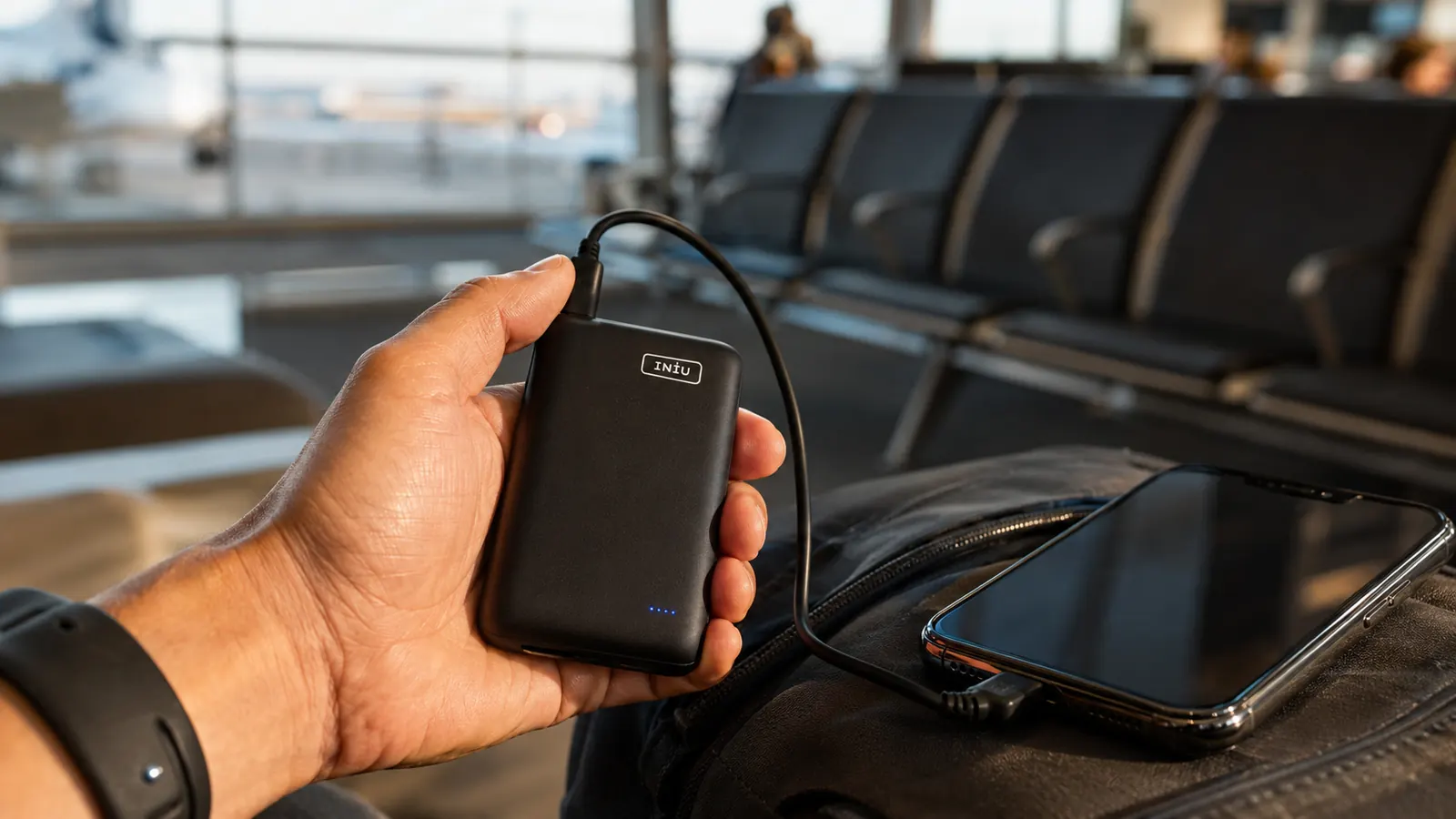
Speed is the biggest gap between these two, and it's not a small one. The INIU bank pushes 45W, which on a phone that supports fast charging gets you from a dead battery to a usable charge noticeably quicker than the Anker unit I borrowed. When you're standing at a gate with fifteen minutes before boarding, that difference is the whole reason you're carrying a power bank in the first place. I've timed it more than once, plugging in at 8 percent with a delayed flight and watching the INIU climb past 50 percent well before the Anker bank got there running the same test the week before.
Size is the other one. INIU built this specific model to be smaller than a typical 10000mAh bank, and you feel it the second you drop both into a jacket pocket. The Anker bank isn't heavy or awkward, it's just built to a more general standard, not a travel-first one. The detachable USB-C cable is a small thing that ends up mattering a lot, since I'm not the guy who remembers to pack a spare cable every single trip. If you want the full breakdown of how it's held up after months of real use, I go through it in my long-term INIU power bank review, and if you just want the blunt pros and cons, that's covered in my honest INIU review.
Where Anker Wins
I'll give Anker its due, because pretending otherwise wouldn't be honest. Anker has been in this category longer than almost anyone, and that track record buys you something real, a company that's been through more product cycles, more customer service tickets, and more real-world failure cases than most newer brands have. If you're the kind of traveler who wants the name you already trust on your laundry list of electronics, that's a legitimate reason to stick with Anker.
Anker also has a much wider lineup. If 10000mAh isn't enough for your trip, you can step up to a 20000mAh or 26800mAh Anker bank with multiple ports for charging a phone and a tablet at once, something INIU's travel-focused lineup doesn't push as hard. If your priority is running several devices off one bank on a longer trip rather than keeping the lightest possible setup, that flexibility matters. Anker's retail presence is bigger too, so if a bank ever fails on the road, you're more likely to find a replacement or a compatible cable in a random airport shop, which is worth something when you're three states from home.
Warranty support is another area where Anker's size works in its favor. A company that's been selling charging gear for over a decade has a more established process for handling a defective unit than a newer brand does, simply from having handled more of them. That doesn't mean INIU's support is bad, my own unit hasn't given me a reason to test it, but if warranty history and company longevity are what you weigh most heavily before buying electronics, that's a fair consideration to put on Anker's side of the ledger.
Stop Watching Your Phone Die at the Gate
The INIU 45W bank was built for exactly this problem, small enough to live in a jacket pocket, fast enough to actually matter before a delayed boarding call.
Amazon Check Today's Price on Amazon →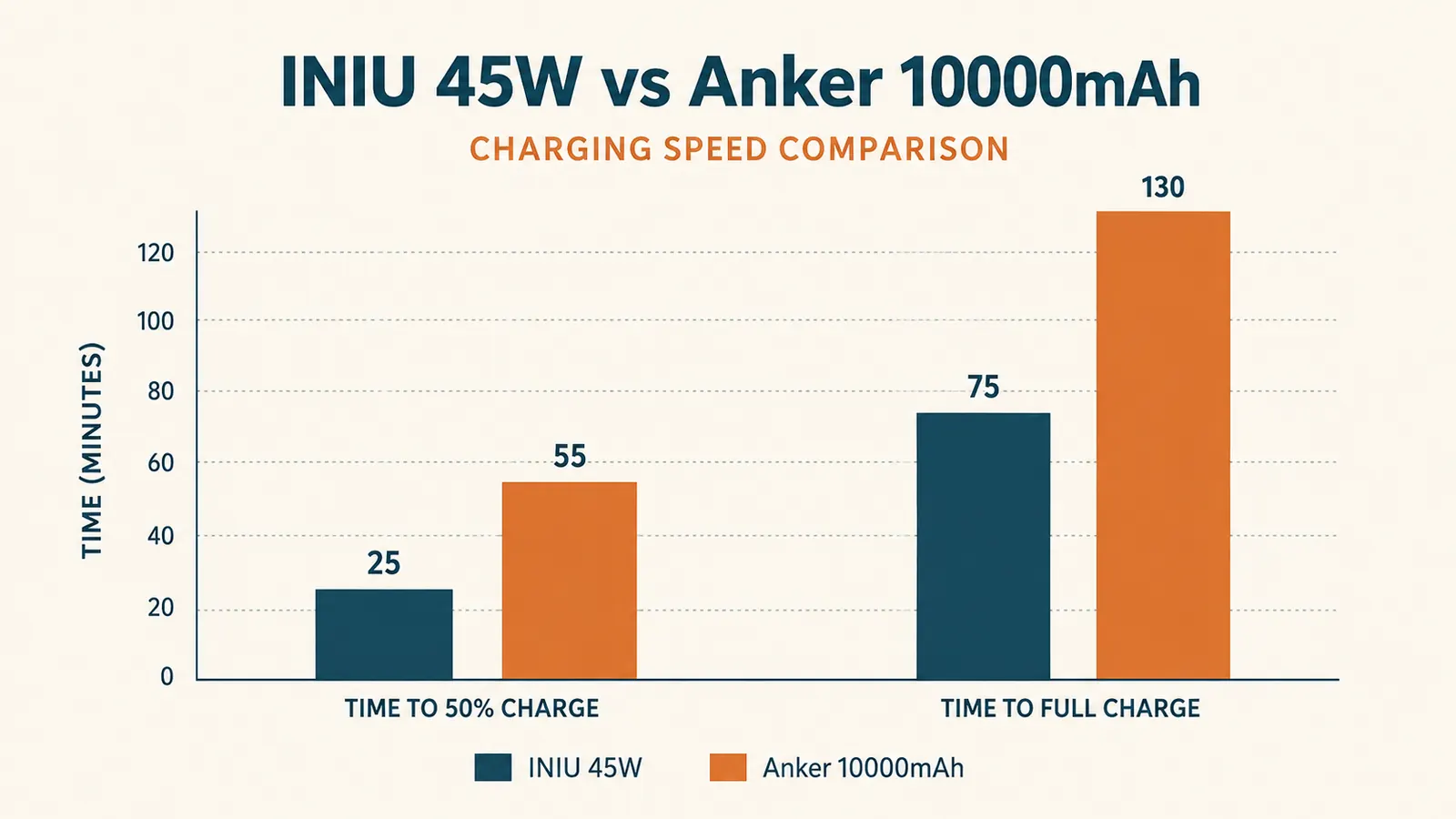
How I Actually Ran This Comparison
I didn't just read spec sheets side by side. Over three trips I alternated which bank rode in my carry-on, always starting both fully charged the night before and always draining my phone down to roughly the same starting percentage before plugging in. Same phone both times, same case, same cable-out routine at the gate. I logged how long it took to hit 50 percent and how long it took to top off, and I paid attention to how each bank felt riding in a jacket pocket through a full day of walking terminals and standing in security lines. I wasn't trying to prove anything going in, I genuinely didn't know which one would come out ahead until I ran the numbers.
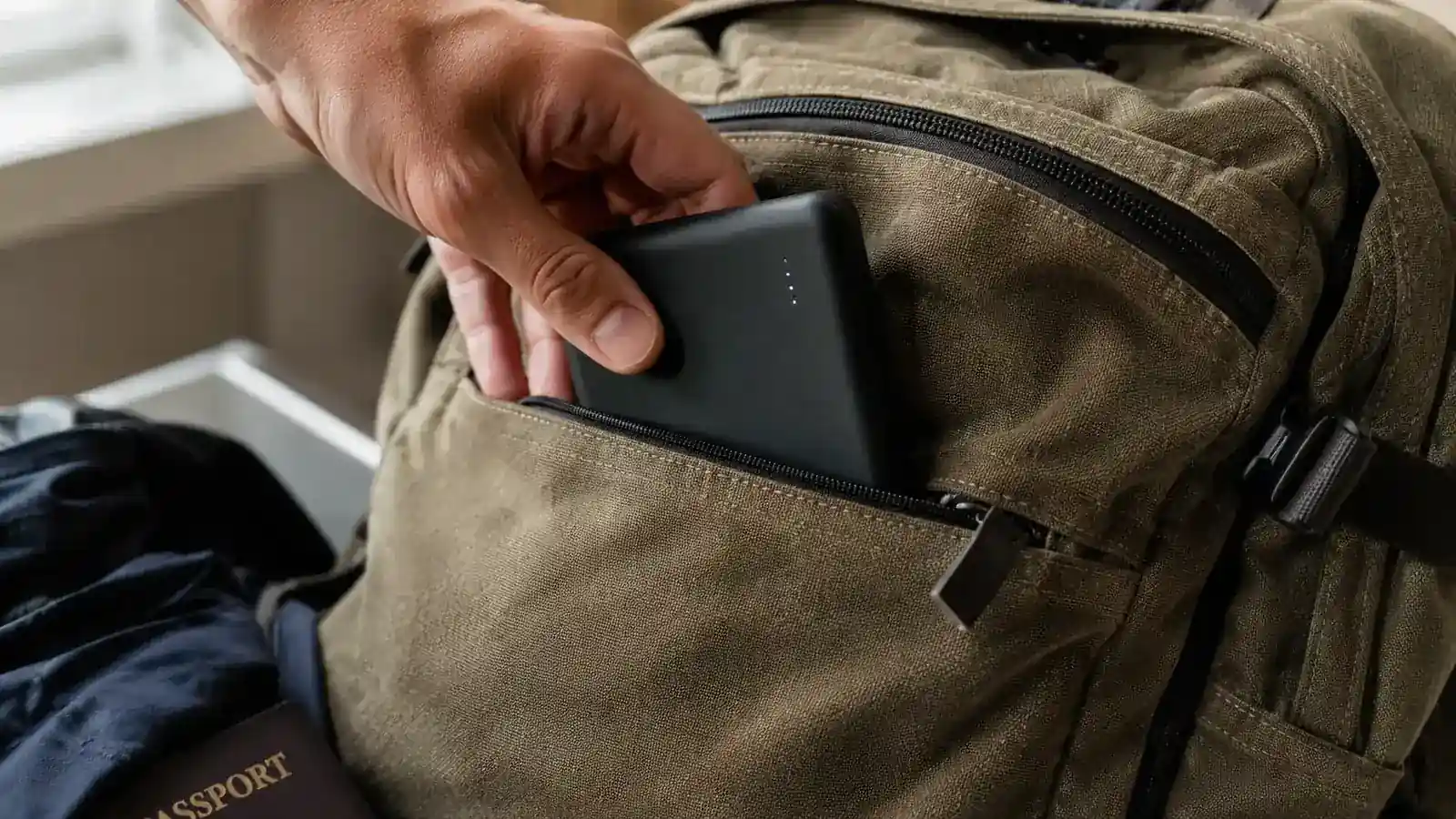
The charging gap held up every time. The INIU bank consistently got my phone to a safe, usable charge faster, which lines up with the wattage difference on paper. What surprised me more was how much the size difference mattered in practice. I didn't expect a couple ounces and a slimmer profile to change how often I actually reached for the bank, but it did. The Anker unit sat in my backpack more than my pocket, which meant I sometimes forgot it was there when I needed it fast. The INIU bank stayed in a jacket pocket the whole time because it didn't feel like carrying extra weight.
I also paid attention to something most comparisons skip, how each bank behaves once it's nearly empty. Both held a charge reliably and neither one died on me mid-trip, which says something good about both brands. But the INIU bank's flight-safe labeling gave me one less thing to think about at TSA, since it's printed right on the unit that it's under the carry-on watt-hour limit. That's a small detail, but if you've ever had a TSA agent pull a bag aside to eyeball a battery, you know it's worth having in writing on the device itself.
Charging Speed and Real-World Charge Times
On paper, 45W versus roughly 20W to 22.5W sounds like a modest gap. In practice, it's the difference between a bank you can trust to save a boarding call and one you plug in mostly out of habit. Most modern phones can accept fast charging well above what Anker's standard 10000mAh models push, which means the INIU bank is actually using more of your phone's charging capability rather than leaving speed on the table.
This matters most in the exact moment you bought a power bank for in the first place, a short window before a flight, a gate change, or a rideshare pickup where you need real battery percentage fast, not eventually. If your charging habits are mostly overnight at a hotel where speed doesn't matter, this gap shrinks in importance. But for the traveler pulling a bank out mid-day with a countdown clock running, it's the single biggest reason I default to the INIU bank now. I walk through a real six-hour delay where this exact scenario played out in how a power bank saved me during a six-hour delay.
A power bank you forgot you were carrying doesn't help you at a dying gate. A power bank that lives in your pocket and charges fast does.
There's a broader lesson here that applies past just these two banks. Capacity numbers get all the attention on the product page, but wattage and physical size are what determine whether you actually use the thing you bought. I've got a drawer at home with two older power banks that technically hold more charge than either of these, and I never carry them, because they're too bulky to grab on the way out the door. The bank that wins isn't always the one with the biggest spec sheet, it's the one you actually have on you when your phone hits single digits. I cover more of that logic in 10 reasons you need a travel power bank and in how to keep your phone charged on flights.
Ports, Cables, and the Small Stuff That Adds Up
The cable question sounds minor until you're the person standing at a charging kiosk with a dead bank and no cable that fits it. INIU solves this by building a short USB-C cable right into the unit that detaches when you don't need it, so there's genuinely nothing extra to remember. Most Anker 10000mAh models ship without a cable at all, which is standard across a lot of the category, but it means one more item has to make it into your bag every single trip, and one more thing that can get left behind in a hotel nightstand drawer.
Neither bank offers passthrough charging in a way I'd rely on, meaning you shouldn't expect to charge the bank itself and a phone plugged into it at the same time overnight and get reliable results from either one. Where they differ is input speed, how fast the bank itself refills before your next trip. The INIU bank's higher wattage rating means less time sitting on a wall outlet the morning of a flight, which matters if you're the type who charges gear the same day you're packing instead of the night before. It's a small edge on paper, but it's shown up for me more than once during a rushed morning departure.
Who Should Buy Which
If you're a regular traveler who wants the fastest, smallest bank that'll actually live in your jacket pocket or carry-on side pouch and get real use, the INIU 45W bank is the one I'd point you to. It's what's been in my own bag for months, and it's the one I reach for without thinking about it, because it's small enough that I don't have to make a packing decision about it. If you're building out a bigger charging setup for multiple devices on longer trips, want the widest lineup of capacities and port configurations, or you simply trust the Anker name from years of using their gear, their lineup is a legitimate choice too, especially if you step up past 10000mAh for the extra ports. For the specific job of keeping one phone alive through a travel day without adding bulk, INIU is the one that's earned the spot in my bag.
The Power Bank That Actually Stays in My Pocket
Small enough to forget it's there, fast enough to matter when your phone's at 8 percent and boarding just got called. That's why the INIU bank replaced everything else I used to carry.
Amazon Check Today's Price on Amazon →