

Last spring I flew out of Orlando with a duffel bag zipped tight and a two-pack of Master Lock 4689T TSA locks clipped onto the zippers, one on the main compartment and one on the smaller front pocket where I keep chargers and a spare phone battery. That trip, start to finish, from the ticket counter in Orlando to baggage claim in Nashville where my son Mark picked me up, the bag came off the carousel exactly the way I packed it. That's really the whole review right there, but stick with me, because a year of flying with these locks taught me more than any one clean trip could.
I bought the Master Lock 4689T two-pack after a rougher trip the year before, when I got to my hotel and found my suitcase zipper pull tugged halfway open, nothing missing that I could tell, but enough to rattle me. My wife Linda travels with me on most of these trips, and she was the one who said, plain as anything, 'Dale, just lock the bag.' So I did. A year later, going on close to fifteen checked bags between visits to Mark in Nashville and my daughter Julie out in Denver, I've got a real opinion on whether a keyed TSA lock is worth the space it takes up in your carry-on.
The Quick Verdict
A solid, no-frills keyed TSA lock that's held up to a year of checked bags without a hiccup. It won't stop a determined thief, but it slows down the casual stuff, and the two-pack means you've got a spare key when, not if, you misplace one.
Amazon Check Today's Price →Tired of Wondering What Happened to Your Bag Between Check-In and Baggage Claim?
A checked bag rides through a lot of hands you never see. A TSA-approved keyed lock won't make it invisible, but it does mean nobody's opening that zipper without a key or a TSA master, and that's worth the few bucks it costs to stop guessing.
Amazon Check Today's Price on Amazon →How I've Used It
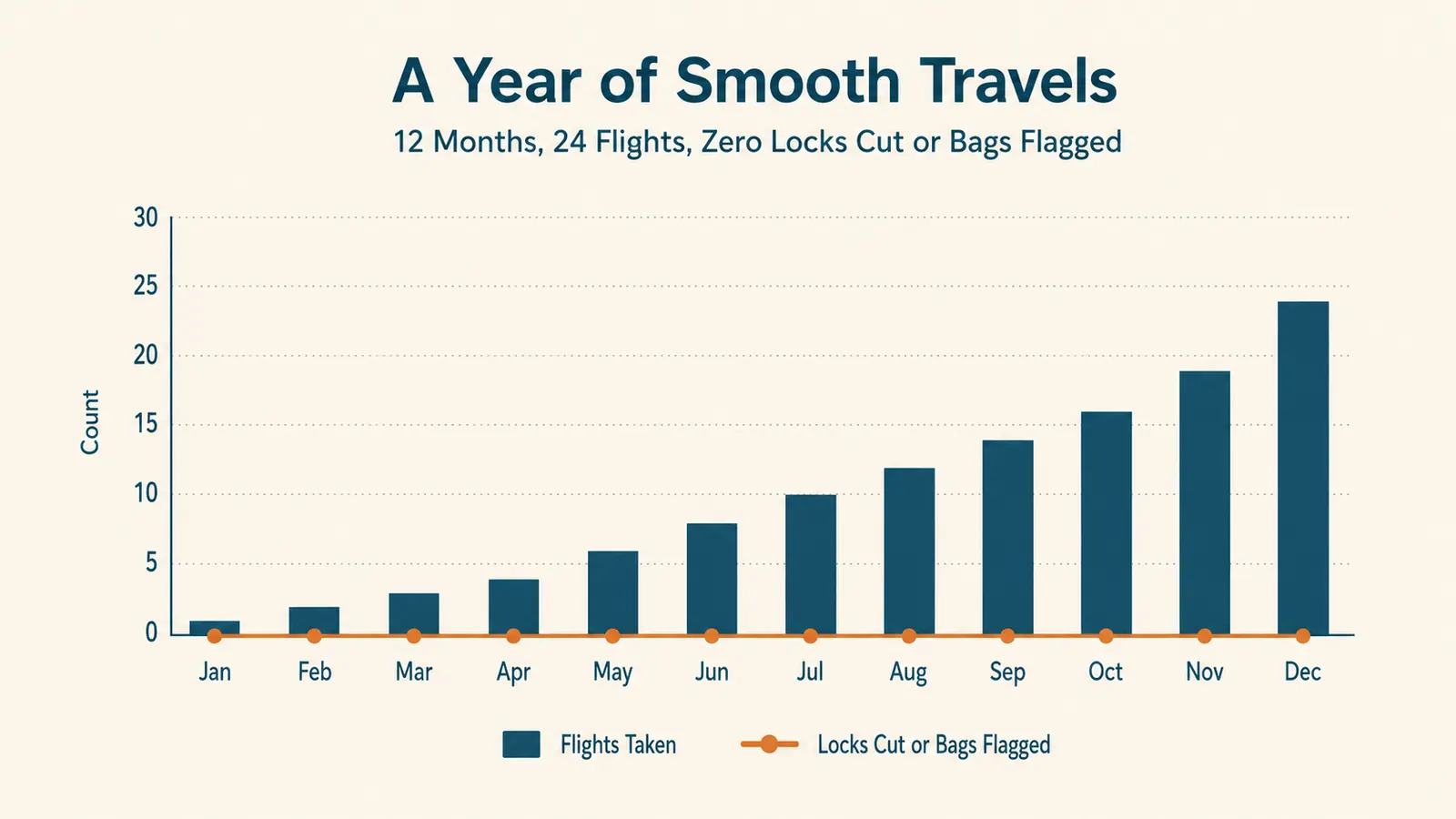
I'm not a gadget guy. I don't buy travel gear to test it, I buy it because I'm tired of the last thing failing me. The Master Lock 4689T two-pack has been on my checked bag for right around fifteen round trips now, covering visits to Mark's place in Nashville, a couple of trips out to see Julie in Denver, and one longer haul to see Linda's sister in Phoenix over the holidays. That's a mix of connecting flights, curbside check-ins, and at least four TSA bag inspections that I know of, because they leave the little green notice card inside when they open your bag.
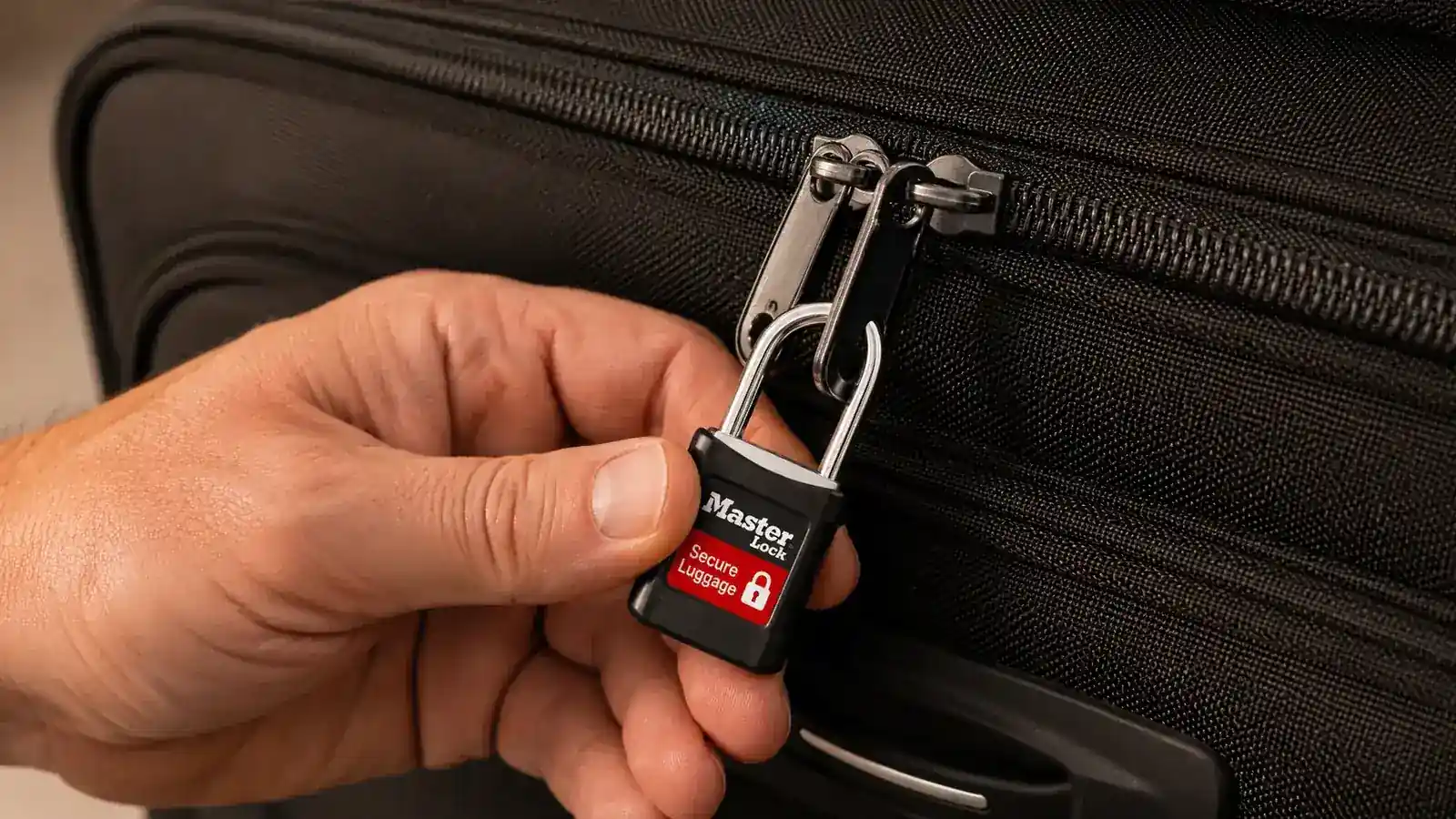
The way it works is simple enough that I didn't need the instructions. You loop the shackle through both zipper pulls, push it into the lock body until it clicks, and that's it, no dial to spin, no combination to remember at six in the morning with a coffee in one hand. TSA officers carry a master key that opens any TSA-accepted lock without cutting it, so if your bag gets pulled for a hand inspection, they open it, do their check, and lock it back up before it goes on the belt. I've had that happen twice this year, once out of Denver and once out of Orlando, and both times the lock was back on the bag, closed, when I picked it up at the other end.
The two-pack matters more than it sounds like it should. I keep one key on my own keyring and a second taped inside a zip pocket in my laptop bag, because I have absolutely lost a house key before and I know myself well enough not to trust one key with a checked bag halfway across the country. Master Lock ships two keys per lock, so between the pair you've got four keys total to spread around, which is more than enough margin for a family that travels together.
The Keyed System, and What Nobody Tells You Up Front
This is a keyed lock, not a combination lock, and that distinction is the whole ballgame with this product. The Amazon listing calls it out plainly, TSA Approved Keyed Lock, and it does exactly what it says. There's no dial, no four-digit code to set or forget. You lock it with a key, you unlock it with a key, and TSA's master key overrides both. If you're the kind of traveler who likes setting your own combination so you're not carrying a physical key, this isn't your lock, and I'd point you toward our side-by-side comparison of Master Lock against a combination-style option before you buy anything.
I'll be straight with you about what this lock is and isn't, because I've read reviews on other sites that oversell this stuff. A TSA lock, keyed or combination, does not make your bag theft-proof. Anyone determined to get into a soft-side suitcase can cut the zipper webbing itself and bypass the lock entirely, lock body untouched. What this lock actually does is stop the casual stuff, the zipper-diving in a crowded terminal, the opportunistic tug at baggage claim while you're distracted looking for a cart. It's a deterrent, not a vault, and any reviewer telling you otherwise is selling you something they haven't tested. For the full list of what a lock like this realistically buys you, I laid it out in 10 reasons TSA luggage locks protect your bags.
The shrouded shackle design is the other thing worth mentioning. The metal loop that runs through your zipper pulls sits recessed into the lock body rather than hanging exposed, which matters more than it sounds like. An exposed shackle is an easy target for bolt cutters, a shrouded one forces whoever's trying to get through it to work at an angle, which mostly just isn't worth the time in a busy terminal or on a loading dock. It's a small design choice, but it's the kind of thing you notice after you've handled a cheaper lock with a shackle just hanging out in the open.
A Year of Wear: What Held Up and What Didn't
Fifteen trips is enough to see real wear, and I've kept a rough mental tally since I started using these. The lock body itself still clicks shut the same way it did on day one, no mushy feel, no hesitation. The key still turns clean in both locks, no grinding, no need to jiggle it like you would with an old deadbolt that's overdue for replacement. That matters to me more than almost anything else on a piece of travel gear, because the worst possible moment to discover a lock is sticking is standing at a departure gate with a boarding pass in your hand.
Where I have seen wear is cosmetic. The finish on the lock body has picked up a few small scuffs and scratches, which makes sense given it's been tossed around a baggage system that isn't exactly gentle with anything. Mine came in a darker color from the 'colors may vary' assortment, and the scuffing shows a little more against that finish than it might against a brighter one. It doesn't affect function at all, but if you're the type who likes gear to look brand new after a year, know that a checked-bag lock is going to earn some character.
The one thing I keep an eye on is the small joint where the shackle meets the body, since that's the stress point on any padlock design. A year in, mine shows no give, no looseness, nothing that makes me think it's close to failing. I've read a handful of complaints online about a lock in this line eventually loosening up after extended use, so I'm not going to pretend it lasts forever. What I can tell you is that fifteen trips over roughly a year hasn't put a dent in mine, and I'll keep using it until it gives me a reason not to.
Who Actually Needs a Second Lock
The two-pack format is the practical answer here, not a marketing gimmick. Most soft-side checked bags have two zipper pulls you'd want secured, the main compartment and a smaller front or side pocket, and locking just one leaves the other wide open, which defeats the purpose. Linda and I each carry a bag with two zippers worth locking, so between us we're already using all four locks from two separate two-packs, plus the spare keys taped into our carry-ons. If you're checking one bag with one zipper track, a single pack covers you fine, but anyone traveling with a family or a bag that has multiple compartments is going to want more than one lock in rotation.
If you're new to locking checked bags at all and want the full rundown on where to put the lock, how tight to thread it, and what TSA actually does when they pull your bag for inspection, I put together a full walkthrough in how to secure checked luggage with a TSA lock that covers it step by step.
Where a Keyed Lock Falls Short
I mentioned it above, but it's worth its own section because I don't want anyone reading this and thinking a lock like this is a security system. It isn't. A determined thief with a knife or a pair of scissors can go through a zipper's fabric track faster than you'd think, lock or no lock, and no TSA-approved lock on the market changes that math. What this product buys you is friction against the low-effort stuff, and honestly, that covers the overwhelming majority of what actually happens to checked bags. I've never had anything stolen from a bag with one of these on it, but I've also never checked anything genuinely valuable, and I wouldn't recommend anyone else do that either, locked bag or not.
The other real tradeoff is the key itself. A combination lock never leaves you standing at baggage claim patting down every pocket looking for a key you swear you packed. I've misplaced a key exactly once, on a trip back from Denver, and thankfully Linda had the spare in her bag. If you've got a track record of losing small things, that's a real strike against the keyed system worth weighing before you buy.
What I Liked
- Shrouded shackle resists casual tampering and bolt cutters better than exposed designs
- TSA officers open it with their master key, no cut locks after an inspection
- Two-pack covers both zippers on most soft-side bags with keys to spare
- A year and roughly fifteen trips in, the lock mechanism still clicks and turns clean
- Compact enough it barely registers in a packed carry-on
Where It Falls Short
- Keyed only, no combination option if you don't want to carry a physical key
- Cosmetic scuffing shows up after regular baggage-system handling
- Does not stop someone willing to cut the zipper fabric itself
- Color is randomized in the two-pack, no way to choose which shade you get
A lock like this won't stop a determined thief. What it stops is the casual stuff, and honestly, that's most of what actually happens to a checked bag.
Who This Is For
This lock makes sense for anyone who checks bags regularly and wants a straightforward, no-fuss way to keep the zippers closed without fumbling a combination at security or baggage claim. If you're the kind of traveler who'd rather carry a key than memorize a code, or you're outfitting a family where everyone needs their own lock without coordinating a shared combination, the 4689T two-pack does the job without overcomplicating it. It's also a smart, low-cost add for anyone who's had a zipper tampered with before, like I did, and just wants that particular worry off the table.
Who Should Skip It
If you hate carrying keys, or you know you'll lose track of one on a long trip through multiple airports, a combination lock is going to serve you better, key or no key to forget. And if you're expecting any TSA-approved lock, keyed or otherwise, to actually secure valuables inside a checked bag, that's not what this product, or any lock in this category, is built to do. For that comparison and an honest look at the combination alternative, see Master Lock vs Sure Lock, and if you want the unfiltered rundown after even more trips, I wrote up the honest review after 15 trips covering a few more specifics on wear.
A Year of Checked Bags, Zero Cut Locks, Zero Surprises at Baggage Claim
That's the track record I've got with the Master Lock 4689T two-pack, and for what it costs to stop wondering what happened to your bag between the ticket counter and the carousel, it's an easy add to your packing list.
Amazon Check Today's Price on Amazon →